


Indian magazines in Arabic
The barefoot language
The intensive presence of Arabic magazines in a country (India) that doesn't speak Arabic is not a statistical matter, but a poem of resistance against oblivion.
Tuesday 07/10/2025
Indian magazines in Arabic
On an indistinct morning, before the clamor of the markets awoke and government newspapers were published, a sheikh stood in a corner of Lucknow, a city that walks on the feet of libraries. He said calmly, with the quiet wisdom of the knowing: "Arabic is not taught; it is evoked."
The sentence wasn’t a declaration, but a prophecy.
This language, which was not the language of India or the tongue of the state, entered Indian cities with an unseen lightness. It crept out from ancient mosques, clung to the walls of institutes, and emerged in the form of magazines known only to those who loved words with a religious or poetic passion.
In 1959, the magazine "Al-Raid" was born from Darul Uloom Nadwatul Ulama in Lucknow. It was not just a bi-monthly in its regularity; it was half-dream, half-wakefulness. Each issue was like a love letter written to the language, in the handwriting of a student who struggled with electricity shortages but had a strong faith in the letter.
A decade later, Banaras University gave birth to a magazine named "Sawt Al-Ummah" (The Voice of the Nation). The name was not merely an echo of a call, but a tree growing in arid soil. Its names changed like all beings pursued by laws, from "Sawt Al-Jam'ah" (The Voice of the University) to "Nashrat Al-Jam'ah" (The University's Bulletin), then to its final name, as if it were searching for a lost identity and finding it each time, but under a new name.
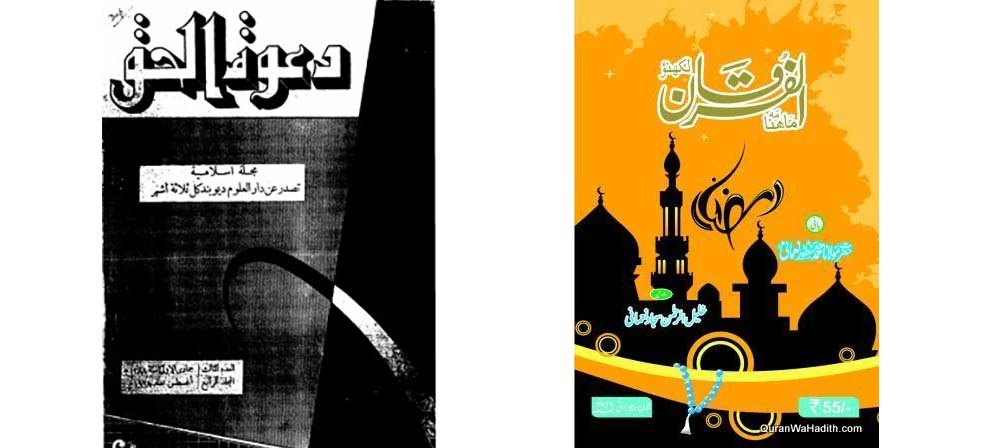
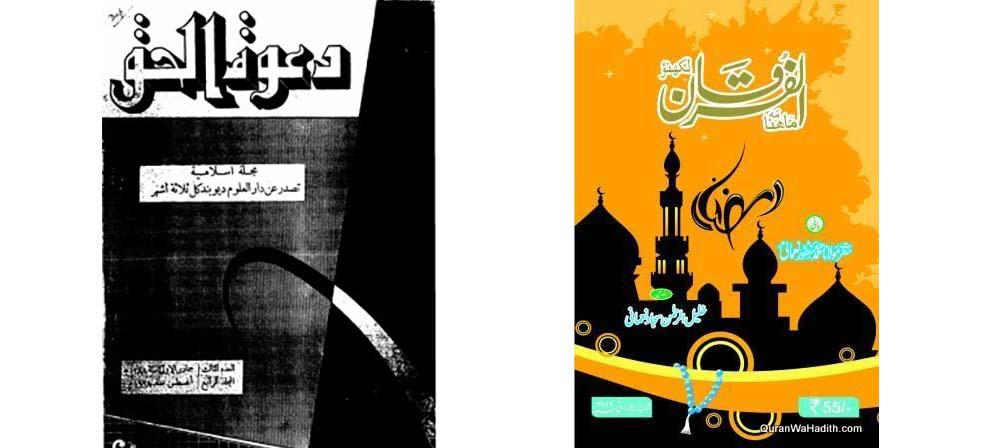
In Deoband, where letters are read like incantations, Professor Wahiduzzaman Al-Kiranawi decided to publish the magazine "Da'wat Al-Haq" (The Call of Truth), and then the newspaper "Al-Da'i" (The Caller), which later became a semi-sacred breath of Darul Uloom. Journalism there is not a profession, but a ritual. Each issue is gathered like fallen leaves before the windy season and read like books of wisdom.
As for the magazine "Al-Majma' Al-'Ilmi Al-Hindi" (The Indian Scientific Academy), it was closer to a linguistic laboratory. Published every six months, it remained as present as a daily. It contained articles that were not read, but savored, and it presented an intimate linguistic history, as if it were the autobiography of a sheikh speaking with the letters, not about them.
In the south, where the Arabic language is further from geographical boundaries, the magazine "Al-Furqan" is published from Bihar, "Al-Sahwa Al-Islamiyyah" (The Islamic Awakening) from Hyderabad, "Al-Nur" (The Light) from Aurangabad, and "Al-Jam'ah" (The University) from Kerala. Each of them resembles a small mirror in a poet's pocket, revealing not his face, but what lies behind it.
In 2008, the magazine "Aqlam Wa'idah" (Promising Pens) appeared as a collective dream for Arabic professors in Indian universities. It was not just an attempt to introduce the Indian reader to modern Arabic literature, but a declaration that ink can travel beyond political borders and that a poem can be born within walls that don't resemble Baghdad or Damascus, but dream of them.
This intensive presence of Arabic magazines in a country that doesn't speak Arabic is not a statistical matter, but a poem of resistance against oblivion. Imagine a magazine published monthly for half a century by hands that do not master Arabic like its native speakers, but love it more than some of its people.
What does it mean for a scientific or literary magazine to be published in a non-official language, in a country where Arabic is not needed to get a job or pass an exam? The answer is as clear as the sun, yet as mysterious as the rain: Here, language is not a means, but an end.
If you think Arabic is dying in diaspora, look at India. There, the language is read like a prayer, taught like a lineage, and loved like an absent mother.
Arabic there doesn't need recognition. It walks barefoot, with its long hair, in the streets of Lucknow, patiently knocking on the doors of villages and writing itself on walls without permission.
And if someone asks you, "What does it mean for a magazine to be published in Arabic in India?"
Tell them: "It means that language, when it loves, doesn't ask for citizenship."
