

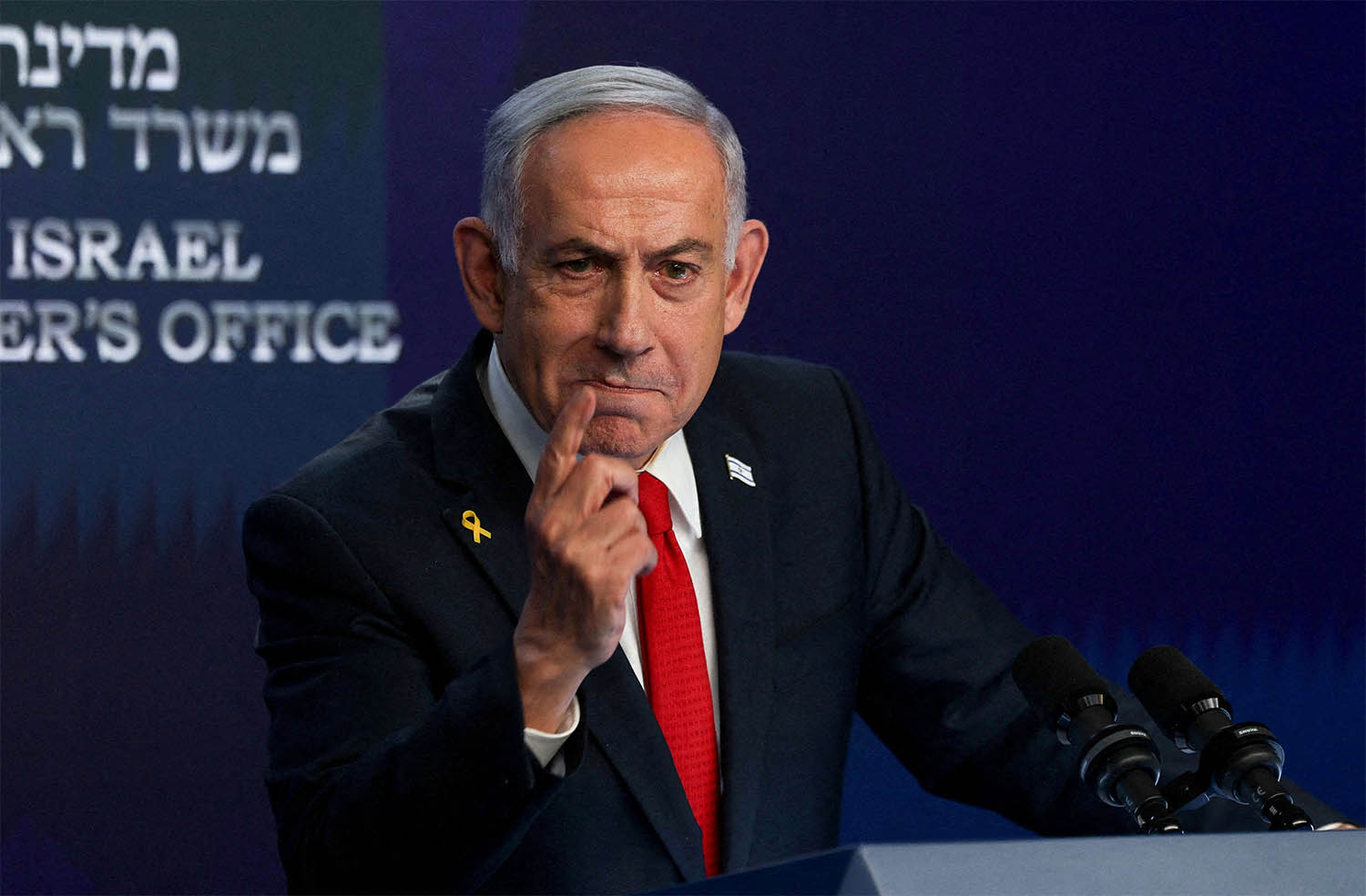
Israeli Prime Minister Benjamin Netanyahu
Netanyahu … The Great satan
The Israeli Prime Minister’s impact of his policies extends beyond the present, leaving a long-term mark on future generations and making peaceful solutions extremely difficult.
Tuesday 30/09/2025
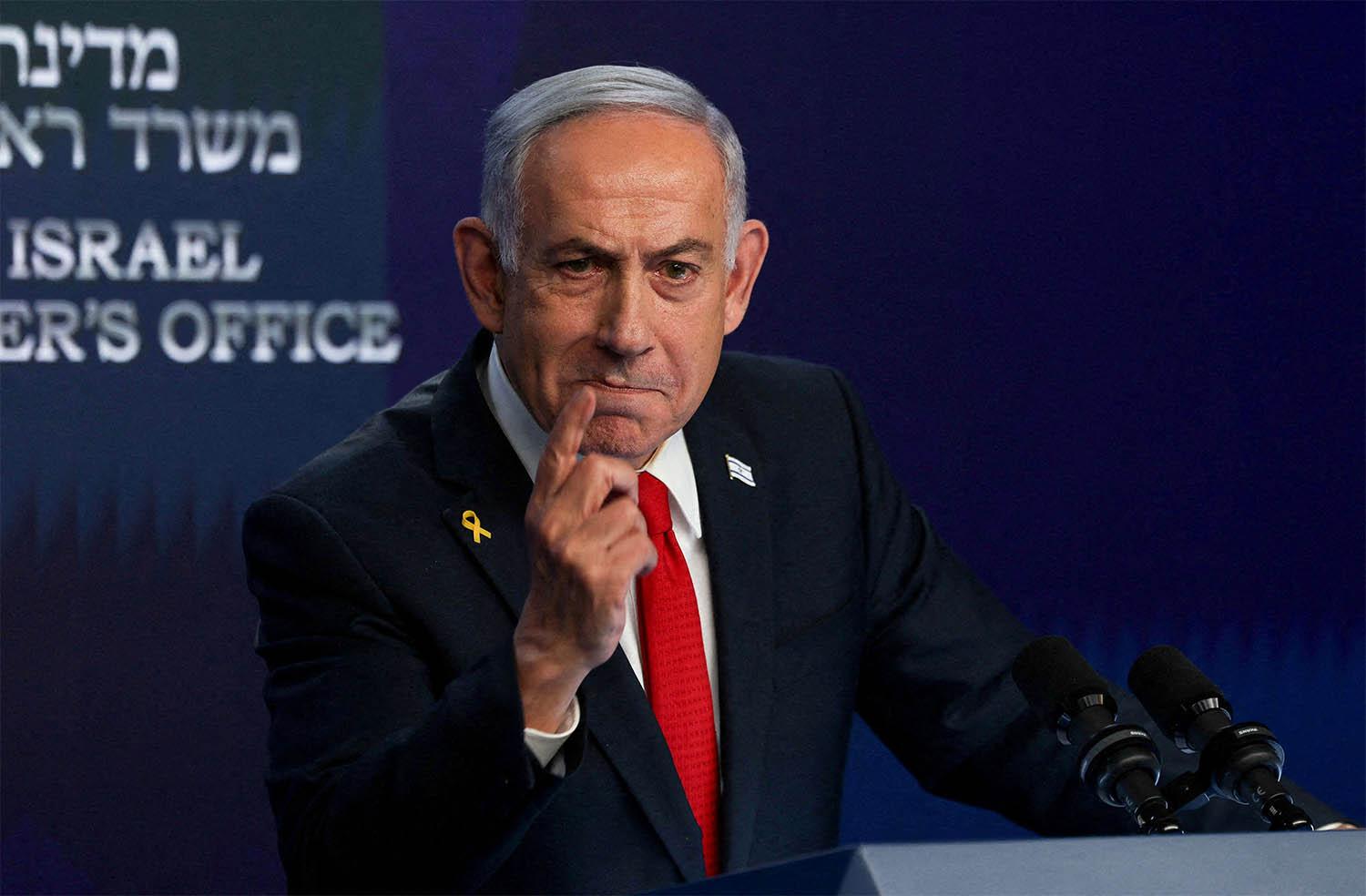
Israeli Prime Minister Benjamin Netanyahu
Since assuming the Israeli premiership, Benjamin Netanyahu has become one of the most influential and controversial figures in the Middle East, his name inextricably linked to military and security policies toward the Palestinians, especially the Gaza Strip. Netanyahu has viewed Gaza not merely as a conflict zone, but as a permanent situation that could be politically leveraged to achieve his personal and partisan goals. This led him to adopt a long-term strategy based on managing crises rather than resolving them. Gaza can be said to have been a dual domestic and foreign policy tool for him, serving as a bridge to pressure the Israeli public on one hand and the international community on the other, while allowing him to cover up issues of internal corruption and economic failure by cultivating a perpetual sense of danger and existential threat.
His policies towards Gaza have not stopped at the level of military operations; they have extended to the use of economic blockade and restrictions on humanitarian aid as instruments of war. This has been documented by reports from Amnesty International and UN statements, which confirm that severe restrictions on the entry of food and medicine were part of a strategy to undermine Palestinian civilian life. These policies, ranging from aerial and artillery bombardment to targeted liquidations, have resulted in widespread destruction of infrastructure, including hospitals, schools, and homes. UN reports indicated that over 66% of buildings in Gaza have been destroyed or damaged, reflecting the scale of the humanitarian disaster and the systematic destruction left by these policies.
The economic and social policies adopted by Netanyahu toward Gaza reveal a depth of strategic planning: the Strip's infrastructure is almost completely dysfunctional, and unemployment has reached record levels, increasing the population's dependence on external aid, which is often obstructed or partially withheld. this situation is used as a dual pressure card: first, on the local population to subjugate them, and second, on the international community to justify harsh security measures, especially to the United States and the European Union, who demonstrate continuous support for Israel while maintaining an external image of a state that respects international law. Here lies the new dimension in reading Netanyahu’s policies: his aim was not only military control but psychological and social control, transforming Gaza into a permanent theater of moral conflict, making war a part of the residents' daily identity.
On the international front, Netanyahu’s policies toward Gaza constitute a unique case study in how to employ military force and political pressure to achieve long-term strategic objectives. An analysis of his international speeches reveals a clear pragmatism: he does not seek to win global moral legitimacy but to secure sustained strategic support from major powers, regardless of the extent of violations committed by Israel. In his recent address to the UN General Assembly, he offered no apology for the killing of civilians in Gaza but framed a narrative that portrays Israel as a persecuted state confronting absolute terrorism, ignoring or justifying the widespread siege and bombardment of the civilian population. This analytical approach illustrates how Netanyahu's goal is not to resolve the conflict but to reproduce it, ensuring the Palestinian file remains a perpetual pressure tool that can be leveraged domestically and externally.
Israeli policies under his leadership can also be read within the concept of using comprehensive force to dismantle Palestinian society, encompassing its social, economic, and educational structure, and turning Gaza into a constantly semi-disaster zone. Analysis of data published by the United Nations and human rights organizations shows that nearly half the population lives below the extreme poverty line, while schools and hospitals are repeatedly destroyed, and children are forced to live with daily scenes of killing and destruction. This style of warfare differs from traditional wars; it is not merely an armed conflict but a comprehensive strategy to psychologically and socially subdue the population, weakening any capacity for organizing resistance or reconstruction.
From an internal political perspective, Netanyahu has successfully used the conflict with Gaza to re-manufacture a constant sense of danger among Israelis, which strengthens his position as a powerful, indispensable satan. The analysis shows he has used wars and the blockade as a cover for domestic policies; an Israeli citizen living under permanent threat becomes more accepting of harsh measures and more willing to support their satan, regardless of the costs of domestic and foreign policies. In this way, Netanyahu was able to integrate foreign and domestic policy in a manner that makes every military operation or blockade part of a larger political project ensuring his long-term survival in power, strengthening his far-right allies, while weakening any opposition calling for a peaceful or negotiated solution.
From a historical perspective, Netanyahu redefined the Gaza crisis and made it more complex and enduring. He is not content with merely reacting to attacks; he transforms every incident into an opportunity to reshape the political narrative, reinforce the internal security discourse, and justify continuous military operations. The ethical analysis of these policies reveals an insistence on indirectly targeting civilians by besieging essential resources and starving the population, depriving thousands of Palestinians of the most basic necessities of life and creating a state of psychological isolation and despair for children, women, and the elderly—actions which UN reports and human rights organizations have deemed grave violations of international law.
Netanyahu has not left Gaza as just a political file; he has transformed it into an Israeli security doctrine, meaning any future satan will inherit an entire system th represent a new type of "Compound Warfare" , combining military power with economic, social, and psychological pressure, along with precise media management, and transforming human suffering into a diplomatic tool. He has left no room for the international community except for monitoring or formal condemnations, while he continues to implement his policies with near-complete freedom, benefiting from traditional Western support and, often, international silence regarding the violations. The analysis shows that this compound warfare did not target Hamas alone but the entire society, turning Gaza into a model for how to use force and psychological and political pressure in contemporary conflicts.at views Gaza as a permanent threat that cannot be tolerated, thus perpetuating the cycle of violence and blockade indefinitely.
Netanyahu’s policies toward Gaza
With the passage of years and the continuation of these policies, it is evident that the strategy was neither fleeting nor random, but an integrated plan for permanent conflict management. Netanyahu recognized that any peaceful resolution could diminish his role and influence, so he was careful to keep the situation in Gaza volatile, ensuring it remains a permanent domestic and foreign political leverage point. This strategic dimension highlights Netanyahu’s ingenuity in using conflict as a political engine, but simultaneously exposes a style of governance that relies on continuous crisis instead of sustainable peace.
The future outlook for the Strip under these policies appears bleak, as every new war or blockade reproduces the same reality: destruction of infrastructure, rising poverty and unemployment rates, outbreaks of disease, and shortages of food and medicine, in addition to the deep psychological impact on children and youth. This reality reflects that Netanyahu's policies were not merely a security reaction but a long-term project to weaken Gaza. This highlights my specific analysis: Netanyahu was not merely a leader protecting Israel but an engineer of a conflict system based on the persistence of pain and suffering, so that Gaza becomes a fixed landmark on the Israeli political map.
In conclusion, it can be said that Netanyahu did not just leave Gaza as part of the conflict; he transformed it into a continuous system of humanitarian and political suffering, where any change in the situation is directly linked to his presence or departure. The impact of his policies extends beyond the present, leaving a long-term mark on future generations and making peaceful solutions extremely difficult. However, hope remains in the steadfastness of the Palestinians and their spiritual and social resistance, demonstrating that Gaza is not just a battlefield but a symbol of continuous human dignity despite all attempts at weakening and destruction. The final analysis reveals that Netanyahu's policy was not merely a military conflict but a complete project for managing pain and suffering as a permanent political tool, which makes the study of these policies essential for understanding the rise and persistence of leaders who rely on crisis as a means of staying in power.
Amr Elghazaly is an opinion writer based in Egypt
Views expressed in this article and may or may not reflect those of Middle East Online.
